
Computer Science and Business Systems (CSBS)

- Course Duration:
- Intake:
- Faculties:
COURSE OVERVIEW
The Department of Computer Science and Business Systems (CSBS) offers a uniquely integrated program that brings together strong technical knowledge in computing with essential business understanding. Designed for the digital and data-driven world, the curriculum helps students build a solid foundation in core computer science subjects such as programming, algorithms, data structures, and software engineering, while also introducing business fundamentals like management principles, communication skills, budgeting, and project planning. A key strength of the department is the active role of TCS experts in shaping and monitoring the syllabus and study paths. This industry partnership ensures that what students learn is aligned with current corporate practices and future workplace demands, giving them an edge in career readiness.
The learning experience emphasizes hands-on exposure through real projects, industry internships, and collaborative assignments. Students are encouraged to think critically, work effectively in teams, and communicate clearly with technical and business stakeholders. By combining academic rigor with practical insights from industry professionals, the CSBS program prepares graduates to take on roles that require both software proficiency and business thinking. Our students are ready to become effective software developers, business analysts, project coordinators, consultants, and future entrepreneurs.
Key Highlights
- Integrated curriculum in computing and business
- Syllabus designed and monitored with TCS expert support
- Focus on practical learning: projects and internships
- Skill development: technical expertise, communication, teamwork
- Career-ready graduates for technology and business roles
- PO1: Engineering Knowledge: Apply knowledge of mathematics, natural science, computing, engineering fundamentals and an engineering specialization as specified in WK1 to WK4 respectively to develop to the solution of complex engineering problems.
- PO2: Problem Analysis: Identify, formulate, review research literature and analyze complex engineering problems reaching substantiated conclusions with consideration for sustainable development. (WK1 to WK4)
- PO3: Design/Development of Solutions: Design creative solutions for complex engineering problems and design/develop systems/components/processes to meet identified needs with consideration for the public health and safety, whole-life cost, net zero carbon, culture, society and environment as required. (WK5)
- PO4: Conduct Investigations of Complex Problems: Conduct investigations of complex engineering problems using research-based knowledge including design of experiments, modelling, analysis & interpretation of data to provide valid conclusions. (WK8)
- PO5: Engineering Tool Usage: Create, select and apply appropriate techniques, resources and modern engineering & IT tools, including prediction and modelling recognizing their limitations to solve complex engineering problems. (WK2 and WK6)
- PO6: The Engineer and the World: Analyze and evaluate societal and environmental aspects while solving complex engineering problems for its impact on sustainability with reference to economy, health, safety, legal framework, culture and environment. (WK1, WK5, and WK7)
- PO7: Ethics: Apply ethical principles and commit to professional ethics, human values, diversity and inclusion; adhere to national & international laws. (WK9)
- PO8: Individual and Collaborative Team work: Function effectively as an individual, and as a member or leader in diverse/multi-disciplinary teams.
- PO9: Communication: Communicate effectively and inclusively within the engineering community and society at large, such as being able to comprehend and write effective reports and design documentation, make effective presentations considering cultural, language, and learning differences.
- PO10: Project Management and Finance: Apply knowledge and understanding of engineering management principles and economic decision-making and apply these to one’s own work, as a member and leader in a team, and to manage projects and in multidisciplinary environments.
- PO11: Life-Long Learning: Recognize the need for, and have the preparation and ability for i) independent and life-long learning ii) adaptability to new and emerging technologies and iii) critical thinking in the broadest context of technological change. (WK8)
Knowledge and Attitude Profile (WK)
- WK1: A systematic, theory-based understanding of the natural sciences applicable to the discipline and awareness of relevant social sciences.
- WK2: Conceptually-based mathematics, numerical analysis, data analysis, statistics and formal aspects of computer and information science to support detailed analysis and modelling applicable to the discipline.
- WK3: A systematic, theory-based formulation of engineering fundamentals required in the engineering discipline.
- WK4: Engineering specialist knowledge that provides theoretical frameworks and bodies of knowledge for the accepted practice areas in the engineering discipline; much is at the forefront of the discipline.
- WK5: Knowledge, including efficient resource use, environmental impacts, whole-life cost, reuse of resources, net zero carbon, and similar concepts, that supports engineering design and operations in a practice area.
- WK6: Knowledge of engineering practice (technology) in the practice areas in the engineering discipline.
- WK7: Knowledge of the role of engineering in society and identified issues in engineering practice in the discipline, such as the professional responsibility of an engineer to public safety and sustainable development.
- WK8: Engagement with selected knowledge in the current research literature of the discipline, awareness of the power of critical thinking and creative approaches to evaluate emerging issues.
- WK9: Ethics, inclusive behavior and conduct. Knowledge of professional ethics, responsibilities, and norms of engineering practice. Awareness of the need for diversity by reason of ethnicity, gender, age, physical ability, etc., with mutual understanding and respect, and of inclusive attitudes.
Faculty List
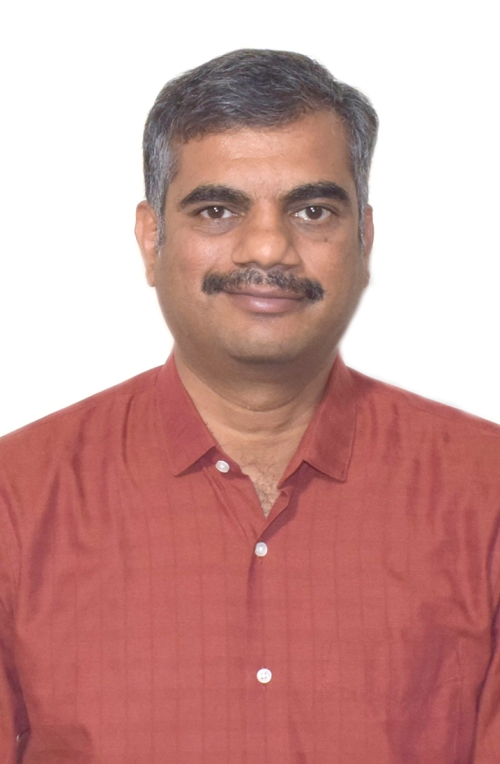
Dr. Vishwa kiran S
Professor & HOD
Computer Science and Business Systems (CSBS)



B.E, M Tech, Ph.D
invited as an esteemed jury for Stage-2 of ELEVATE 2025 (F.Y. 2025-26) under Idea2PoC Grant-in-Aid scheme for Start-ups’ as per Karnataka Start-up Policy 2022-2027 Oct'25 at KITS, Sheshadripuram, Bengaluru.
Embedded System and Intelligent System
IAENG
- published a paper titled “Bayes IDS: A Bayesian-optimized learning-based intrusion detection system”, by The European Physical Journal Plus, indexed in Scopus. (Q2 Journal) https://doi.org/10.1140/epjp/s13360-025-07001-9. (Published on 16.11.2025)
- Scientific, L. L. (2025). LEVERAGING DEEP LEARNING FOR REAL-TIME, CONTINUOUS MONITORING AND PREDICTION OF SEPSIS IN ICU PATIENTS USING MULTISENSORY DATA. Journal of Theoretical and Applied Information Technology, 103(10).
- Shivram, R., Prasad, B. G., & Kiran, S. V. (2024). WON: A hypothetical multi-hop ad-hoc wireless ultra-large scale worldwide one network. International Journal of System Assurance Engineering and Management, 15(10), 4714-4729.
- Vishwa Kiran, S., Kaur, I., Thangaraj, K., Saveetha, V., Kingsy Grace, R., & Arulkumar, N. (2023). Machine learning with data science-enabled lung cancer diagnosis and classification using computed tomography images. International Journal of Image and Graphics, 23(03), 2240002.
- Kiran, S. V., Raghuram, S., Thriveni, J., & Venugopal, K. R. (2023). Reduction of jitter in 3D video by transmitting over multiple network paths. International Journal of Advanced Intelligence Paradigms, 24(1-2), 110-125.

Dr. Archana R A
Associate Professor
Computer Science and Business Systems (CSBS)
B.E, M.Tech, Ph.D
Big Data Security
IAENG
- "1. Anomaly detection based self-healing mechanism using dynamic diffusion spatial-temporal graph convolutional network in industrial IoT "
- "2. Decoding DeFi: a Comparative Analysis of Popular and High-Traffic Decentralized Finance Applications"
- "3. A D-Tect System for Robust Human Target Detection and Acquisition to Enhance Safety"
- "4. Bone Tumour Detection and Classification Using Deep Learning Based on Computed Tomography "
- " 5. Enhanced efficient and security in big data using TDES and machine learning technique"

Dr.Geetha Raghuraj
Associate Professor
Computer Science and Business Systems (CSBS)
Ph.D
Privacy and Analytics, Machine Learning, Algorithmic Design and Data Structures
“Spotlight Award” for best performance in Year-end Impact Awards 2024 & 2025 at Capgemini Tech Services Ltd, M.Tech Gold Medalist in VTU
ISTE
Optimized Deep Learning for Enhanced Trade-off in Differentially Private Learning, Engineering, Technology and Applied Science Research 11(1):6745-6751, Feb 2021, DOI:10.48084/etasr.4017(WoS)
"K-Anonymization-Based Temporal Attack Risk Detection Using Machine Learning Paradigms, Journal of Circuits, Systems and Computers, May 2020 (WoS )"
Design of Big Data Privacy Framework—A Balancing Act. In: Advances in Data Sciences, Security and Applications. Lecture Notes in Electrical Engineering, vol 612. Springer, Singapore, Feb 2020 (Scopus)
Evaluating Optimal Differentially Private Learning – Shallow and Deep Techniques, International Journal of Innovative Technology and Exploring Engineering (IJITEE) ISSN: 2278-3075, Volume-9 Issue-10, August 2020 (Scopus)
"Balancing Privacy Vs Efficiency in Data Analytics using Nearest Neighbour Randomization, International Journal of Innovative Technology and Exploring Engineering (IJITEE) ISSN: 2278-3075, Volume 8 Issue-12, October 2019 (Scopus) "
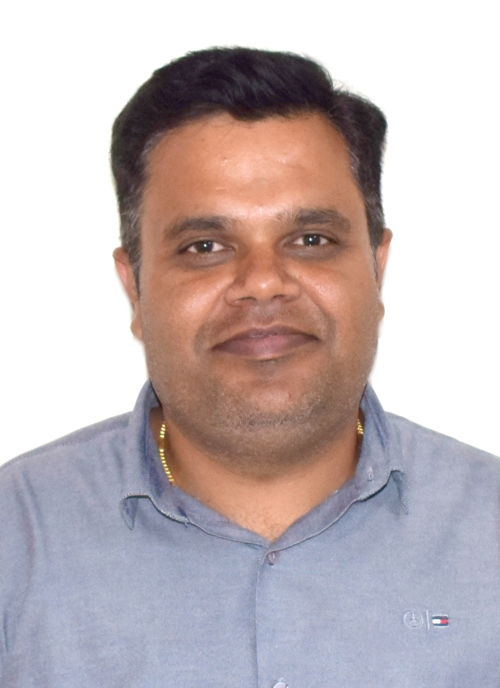
Prof. Rajesh N V
Assistant Professor
Computer Science and Business Systems (CSBS)
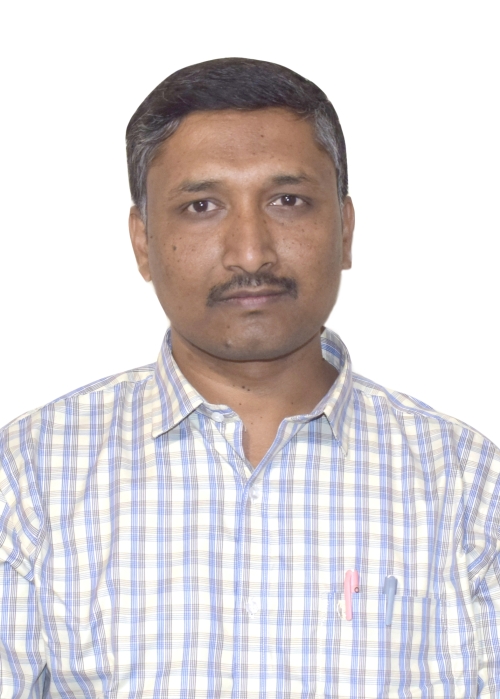
Prof. Pradeep Kumar G M
Assistant Professor
Computer Science and Business Systems (CSBS)
M.Tech,(Ph.D)
Machine Learning, Deep Learning
CSI, AMIE
- Recognition and Identification of COVID-19 from Chest X-Rays for Earlier Diagnosis
- Enhancing Retrieval-Augmented Generation via Dual-Granularity Document Indexing
- Detecting an Employee's Stress Using Emotional Intelligence-Based Machine Learning Models
- "Mathematical Framework for Measuring and Enhancing Cybersecurity Awareness Against Phishing Attacks"
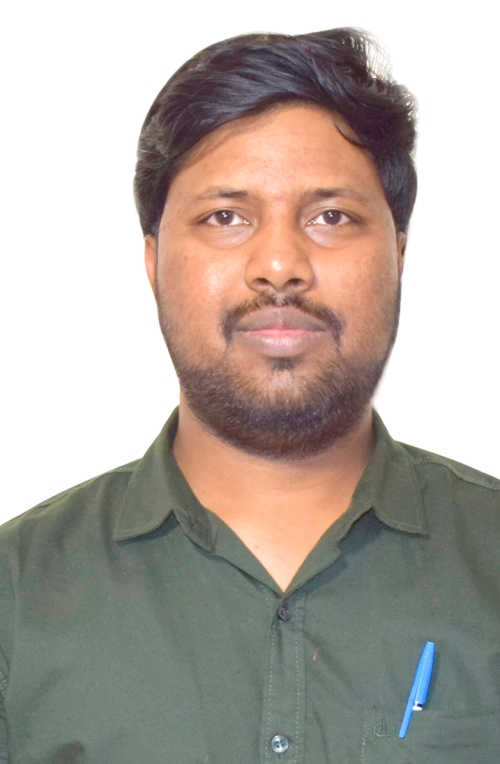
Prof. Udayaprasad P K
Assistant Professor
Computer Science and Business Systems (CSBS)
M.Tech (Ph.D)
Artificial Intelligence, Internet of Things
ACM
- Udayaprasad, P. K., J. Shreyas, N. N. Srinidhi, SM Dilip Kumar, P. Dayananda, Sameh S. Askar, and Mohamed Abouhawwash. "Energy efficient optimized routing technique with distributed SDN-AI to large scale I-IoT networks." IEEE Access 12 (2024): 2742-2759.
- Reddy, Chethana S., Dharamendra Chouhan, P. K. Udayaprasad, N. N. Srinidhi, and S. M. Dilipkumar. "Geographic routing scheme for resource and communication efficiency in the IoT ecosystem using swarm-intelligence based BFO algorithm." Journal of Information Technology Management 14, no. 1 (2022): 41-64.
- Jumnal, Anand, and Udayaprasad PK. "Bio-Inspired ACO-based Traffic Aware QoS Routing in Software Defined Internet of Things." Applied Artificial Intelligence 38, no. 1 (2024).
- Shreyas, J., Dharamendra Chouhan, A. R. Akshatha, P. K. Udayaprasad, and Dilip Kumar SM. "Selection of optimal path for the communication of multimedia data in internet of things." In 2020 6th international conference on advanced computing and communication systems (ICACCS), pp. 477-481. IEEE, 2020.
- Shreyas, J., H. Deepa, P. K. Udayaprasad, N. N. Srinidhi, and S. M. Dilip Kumar. "Energy optimization to extend network lifetime for IoT based wireless sensor networks." In 2022 4th International Conference on Smart Systems and Inventive Technology (ICSSIT), pp. 90-93. IEEE, 2022.
Dr. R Jennie Bharathi
Assistant Professor
Computer Science and Business Systems (CSBS)
Ph.D
BEST PAPER AWARD in IEEE conference ICINVENTS 2025, Coimbatore,TN, Completed 40hours virtual APEX FDP on IoTDE organized by TCS
Information and Communication, Network security
IEI
- solar powered hybrid desalination and salinity control system using reverse osmosis and electro dialysis, IEEE conference-ICINVENTS 2025, SKCET,Coimbatore,TN
- AI based Drop out prediction and counselling system, IEEE - ICSSS 2025, chennai, TN
- AI based internship recommendation system , IEEE - ICSSS 2025, chennai, TN
- Apply ML to Augmented reality applications:Recognizing scenery and tracking objects for interactive learning and gaming conditions , IEEE ICBDS 2025

Prof. Geetha Rani Kadava
Assistant Professor
Computer Science and Business Systems (CSBS)
MTech (Network and internet Engg)
"1. Heading an Award winning Non-profit called Little-WISE, working on UNSDGs and effect of plastics and chemicals on Children's health.
2. My non-profit was part of Impact Orbit Incubation at IIMB's NSRCEL for 'Tech Driven Social Impact'
3. Have won best performer awards in all previous companies"
Software, Business and Management

Prof. Biraj Paul
Teaching Assistant
Computer Science and Business Systems (CSBS)
MTech(CSE), BTech(CSE)
2 times GATE qualified
Data Structures, Algorithms, Operating System, Database Management Systems
SensHAR: A Framework to Annotate, Record and Detect Real Time Activity on Edge Devices


